 (Image via
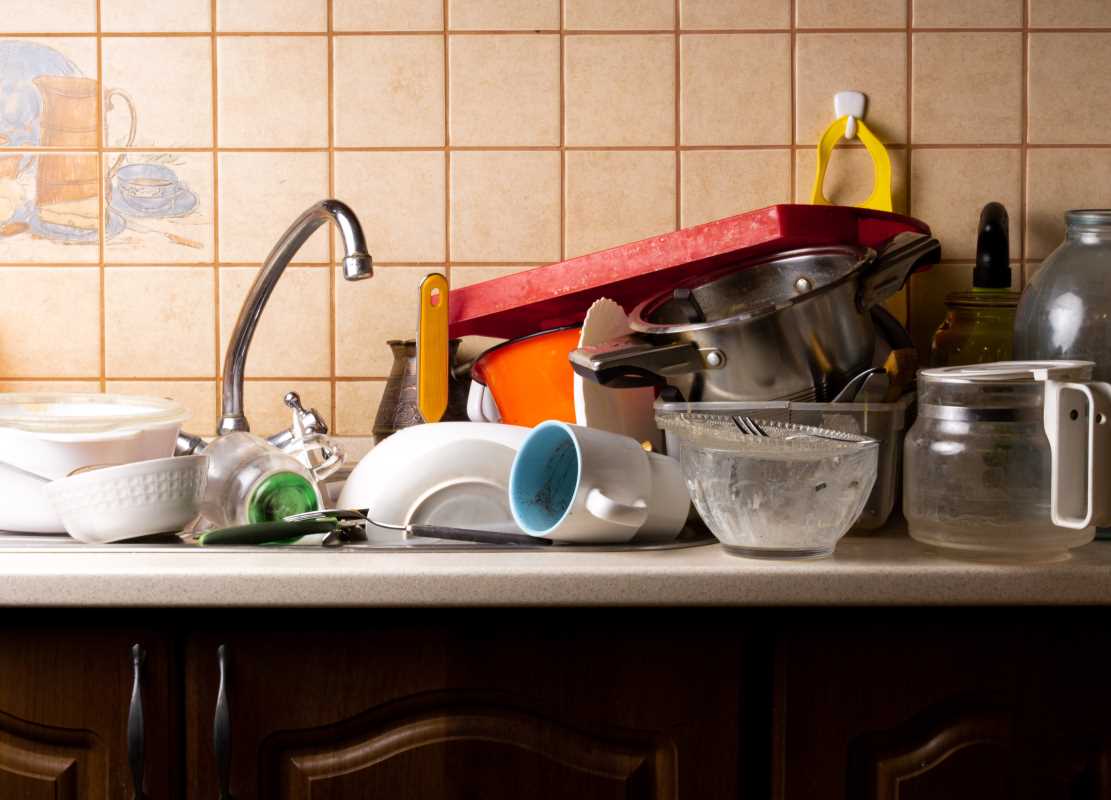
The kitchen counter. It’s supposed to be a pristine workspace for culinary creativity—a place where you chop vegetables, roll out dough, and plate beautiful meals. In reality, for most of us, it’s a chaotic battleground. It’s the unofficial landing strip for mail, keys, and loose change. It’s a graveyard for half-eaten snacks and a museum of small appliances you’ve used exactly once. Before you know it, your beautiful countertop has vanished under a mountain of clutter, leaving you with one tiny, sticky corner to make a sandwich. If this sounds painfully familiar, you’re not alone. The kitchen counter is a natural magnet for mess, and keeping it clear can feel like a constant, losing battle.
But what if you could finally declare victory? Reclaiming your counter space is about more than just tidiness; it's about making your kitchen more functional, less stressful, and a more joyful place to be.
Understanding the Enemy
To win this war, you first need to understand your opponent. The clutter on your counter isn't just a random collection of items; it’s a physical manifestation of daily habits and organizational challenges. There are a few key reasons why kitchen counters become ground zero for mess.
The "Drop Zone" Phenomenon
Your kitchen is often the main entry point to your home. When you walk in the door, tired after a long day, what’s the first flat surface you see? The counter. It’s the most convenient place to drop everything you’re carrying: your keys, your wallet, the mail, your sunglasses, and that bag of groceries you plan to put away later. This "drop and go" habit quickly turns a clean counter into a sea of pocket contents and unopened letters. Without a designated home for these items, the counter becomes their default, and temporary resting place that slowly becomes permanent.
Lack of Functional Systems
Another major culprit is a lack of efficient systems within your kitchen. When your cabinets and drawers are disorganized or packed full, it’s easier to leave things out on the counter than to put them away. Do you have to unstack three other pans to get to the one you need? Is your utensil drawer a jumbled mess? When putting something away feels like a complicated puzzle, our brains will choose the path of least resistance, which is to simply leave the item on the counter. The mess isn’t a sign of laziness; it’s a sign that your current kitchen layout isn’t working for you.
Appliance Overload
Modern kitchens are filled with an ever-growing number of gadgets: the air fryer, the stand mixer, the high-speed blender, the espresso machine, the toaster. While these appliances can be wonderful, they are also space hogs. When too many of them live permanently on your countertop, they not only take up valuable prep space but also create visual clutter. The bulky machines make the space feel crowded and can be difficult to clean around, adding to the overall sense of chaos.
The Battle Plan: A Step-by-Step Guide to Reclaiming Your Counters
Ready to fight back? This plan will guide you through decluttering and reorganizing your kitchen for a lasting victory. Set aside a few hours, put on some music, and prepare to be amazed at the transformation.
Phase 1: The Great Counter Clear-Off
You cannot organize clutter. The first step is a clean slate. You need to remove every single thing from your kitchen counters. Yes, everything. Unplug the toaster, move the fruit bowl, and gather up every last stray pen and rubber band.
As you clear the counters, sort items into three distinct piles:
- Things That Belong in the Kitchen: This includes food items, dishes, and small appliances.
- Things That Do NOT Belong in the Kitchen: This is your pile of mail, keys, loose papers, and other random items that have migrated from other parts of the house.
- Trash/Recycling: This is for expired food, broken items, and actual garbage.
Once the counters are completely empty, give them a thorough cleaning. A truly clean surface will motivate you to keep it that way.
Phase 2: Create Smart, Functional Zones
Now, look at your beautifully clean counters. Before you put anything back, it’s time to think like a designer and create zones. Assigning a purpose to each area of your kitchen will make it far more efficient and help you decide what truly needs to live on the counter.
Common kitchen zones include:
- Prep Zone: This should be the largest, clearest stretch of counter space, ideally located between the sink and the stove. This area should be kept as empty as possible for chopping, mixing, and assembling meals.
- Cooking Zone: This is the area around your stove. The only things that should live on the counter here are items you use every single time you cook, like a container of cooking oils and a crock of essential utensils (spatula, wooden spoon, tongs).
- Cleaning Zone: This is the area around your sink. A small tray holding your dish soap, a sponge, and a hand soap dispenser is all you need here. Keeping these items contained on a tray prevents water rings and soap scum from building up.
- Consumables Zone: This could be a corner dedicated to your coffee maker, along with a container for your coffee beans and a few favorite mugs. Or it could be where your toaster lives, with the bread bin nearby.
Phase 3: A Ruthless Edit of What Goes Back
This is the most important phase. Look at your pile of kitchen items and ask yourself a tough question for each one: Do I use this every single day?
If the answer is not a firm "yes," it does not deserve a permanent spot on your counter.
- The Stand Mixer: Do you bake bread daily? If not, that heavy stand mixer can be stored in a lower cabinet or pantry.
- The Blender: Do you make a smoothie every morning? If so, it can stay. If it’s a once-a-week habit, find it a home in a cabinet.
- The Knife Block: A big, bulky knife block takes up a huge amount of counter real estate. Consider switching to a magnetic knife strip mounted on the wall or an in-drawer knife organizer. Both of these options free up space and look incredibly sleek.
Your goal is to be brutally honest about your daily habits, not your aspirations. Only your true daily essentials should earn back their spot on the counter. Everything else needs to find a new home in a cabinet or drawer.
Winning the War: Long-Term Systems for a Clutter-Free Life
You’ve cleared your counters and put things back with intention. Now, how do you prevent the enemy from advancing again? By setting up new systems.
Establish a Command Center
Remember that "Drop Zone" phenomenon? The only way to combat it is to create a new, designated drop zone that is not your kitchen counter. This is your command center. It can be a small section of wall in your entryway or a corner of your kitchen.
Your command center should include:
- A Key Hook: A simple, stylish set of hooks by the door for your keys.
- A Mail Sorter: A wall-mounted mail sorter with slots for incoming mail, outgoing mail, and important papers. Open your mail here immediately and recycle junk mail on the spot.
- A Small Tray or Bowl: A decorative bowl to catch loose change, sunglasses, and other pocket contents.
By creating an intentional home for these items, you retrain your brain to put them where they belong from the moment you walk in the door.
Make Your Cabinets Work Smarter, Not Harder
The easier it is to put something away, the more likely you are to do it. Invest in a few simple organizational tools to make your cabinets and drawers hyper-functional.
- Drawer Dividers: Use dividers in your utensil drawer to keep everything in its place. No more digging through a jumbled mess to find the can opener.
- Tiered Shelves: For cabinets with tall shelves, tiered risers allow you to see everything at once. This is perfect for spices, cans, or mugs.
- Vertical Organizers: Use vertical dividers to store baking sheets, cutting boards, and pot lids on their sides. This makes them much easier to grab than when they are stacked.
When every item in your kitchen has a logical, easy-to-access home, you eliminate the excuse to leave it out on the counter.
Implement the "One-Minute" Rule
Adopt a simple but powerful new habit: if a task takes less than one minute to complete, do it immediately. Rinsing your plate and putting it in the dishwasher takes 30 seconds. Wiping up a few crumbs takes 10 seconds. Putting the peanut butter back in the pantry takes 15 seconds. These tiny actions prevent small messes from accumulating into a large-scale disaster.